

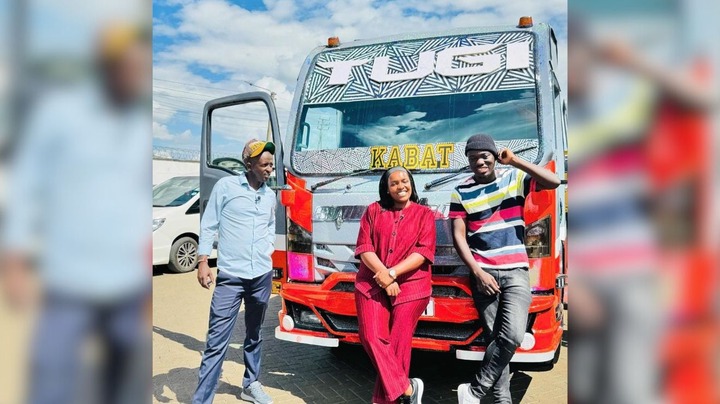
Popular Kenyan comedian Timothy Kimani, widely known as Njugush, has once again captured public attention after undertaking a major revamp of his matatu Tugi, even as he navigates a significant transition in his personal life.
Recent reports confirmed that Njugush and his long time partner Celestine Ndinda, also known as Wakavinye, mutually agreed to end their relationship. The couple, who had built a strong brand together over the years, stated that their decision was peaceful and focused on maintaining a healthy co parenting arrangement for their children.
Amid the personal developments, Njugush has turned his attention to his transport business, where he continues to expand his investments. His matatu Tugi, which operates under the Super Metro Sacco, is currently undergoing an extensive transformation aimed at elevating its appeal within Nairobi’s competitive public transport sector.
Images shared online show the vehicle inside a garage receiving a complete makeover. The revamp includes fresh paintwork, upgraded lighting, and artistic enhancements that align with the vibrant nganya culture commonly seen in the city. The redesign marks a shift from its previous simpler look to a more eye catching and modern finish.
Tugi, named after Njugush’s firstborn son, is part of the comedian’s growing fleet, reflecting his strategic move to diversify income beyond entertainment. Since venturing into the matatu business, Njugush has positioned himself among a number of Kenyan celebrities exploring alternative investment opportunities.
The timing of the revamp has sparked conversations among fans, with many linking it to the recent changes in his personal life. While Njugush has not publicly connected the two, supporters online have interpreted the move as a sign of resilience and focus on growth despite challenges.
At the same time, the transformation comes amid ongoing discussions in Kenya’s transport sector regarding regulations on matatu modifications, particularly graffiti and custom designs. The upgrades on Tugi appear to strike a balance between compliance and maintaining the bold aesthetic that defines Nairobi’s matatu culture.
Public reaction to the project has largely been positive, with many Kenyans praising the improvements and expressing anticipation for the final look once the work is complete. Others have lauded Njugush for his business acumen, noting that the matatu industry remains a viable investment when managed effectively.
As he continues to adapt to changes in both his personal and professional life, Njugush’s decision to revamp Tugi highlights a forward looking approach. The move not only reinforces his presence in the transport sector but also signals his commitment to evolving and staying relevant in multiple fields.