

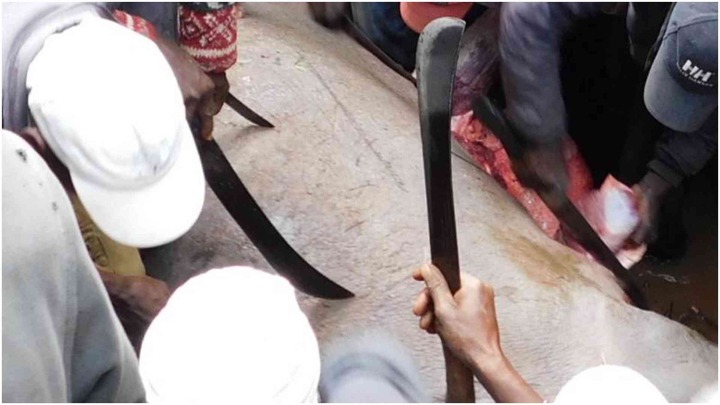
For many Nairobians, a trip to the Central Business District (CBD) has become a gamble with fate. Once known as the city’s bustling hub of commerce, the streets of Moi Avenue, Kimathi Street, and Tom Mboya Road are now haunted by marauding gangs who pounce on unsuspecting pedestrians in broad daylight.
Residents and workers narrate chilling encounters with knife-wielding thugs who appear out of nowhere, surround their victims, and strip them of valuables in a matter of minutes. Some gangs reportedly use bizarre weapons, including bottles of human waste, which they smear on victims to immobilize them before fleeing with phones, handbags, and wallets.
One victim, Brenda Kimathi, a teacher, described her recent ordeal while walking near Kimathi Street. “I noticed a group of young men following me. I panicked and ran across the road without thinking, almost getting hit by a car. I don’t think I’ll ever step in town again,” she said, still shaken by the incident.
Social media has since been flooded with videos and testimonies exposing the rising insecurity, with Nairobians expressing frustration over the brazenness of the attacks. The situation has raised questions about how gangs manage to operate freely despite the heavy presence of police patrols within the CBD.
Nairobi County Chief Officer Geoffrey Mosiria confirmed the surge in muggings and assured the public that his office had alerted security agencies. “We urge residents to report suspicious activity immediately. Protecting the city is a shared responsibility,” he stated.
Still, fear lingers. As dusk falls, Nairobi’s streets—once buzzing with life—are now shadowed by uncertainty, with many residents choosing to avoid the CBD altogether rather than risk falling prey to the knife gangs.
By tuko