

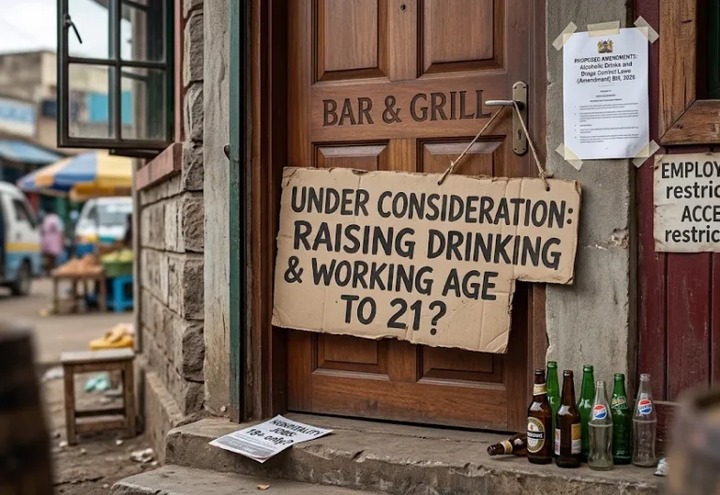
Kenyans aged between 18 and 20 could face restrictions extending beyond alcohol consumption if Parliament approves proposed amendments to the country’s alcohol laws, potentially affecting their access to entertainment venues and employment opportunities in the hospitality industry.
The Alcoholic Drinks and Drugs Control Laws (Amendment) Bill, 2026, seeks to raise the minimum legal drinking age from 18 to 21, but its proposed changes also target people working in businesses involved in manufacturing, selling and distributing alcoholic drinks.
The Bill, which was introduced in the National Assembly on Thursday, November 5, 2026, proposes restricting licences for alcohol-selling premises and employment in activities connected to alcohol sales to individuals who have attained 21 years.
This means the proposed legislation could have implications for young Kenyans seeking employment in bars, restaurants, liquor outlets and other businesses dealing in alcoholic beverages.
The proposals represent a wider regulatory shift that could affect both consumers and businesses if lawmakers approve the amendments.
National Assembly Majority Leader Kimani Ichung’wah defended raising the drinking age, arguing that many 18-year-olds were not mature enough to make informed decisions about alcohol consumption.
“Many of our children at 18 years are still very young and unable to make conscious decisions about what is good or bad in their lives,” Ichung’wah told Parliament.
Businesses face changes
The proposed restrictions could also force alcohol manufacturers, distributors and retailers to reconsider how they recruit workers and operate their businesses.
Licensed premises would be prohibited from admitting anyone below 21, including individuals accompanied by adults.
The Bill further proposes banning alcohol sales through online platforms, courier services, home deliveries, hawking and vending machines.
Alcohol outlets would also be prohibited from operating within 300 metres of learning institutions.
Another significant proposal is the introduction of a Ksh2-per-litre levy on alcoholic beverages manufactured or imported into Kenya.
The money would support alcohol regulation and programmes addressing drug and substance abuse.
Under the proposed funding arrangement, at least 50 per cent of the annual revenue generated would finance the National Alcoholic Drinks Control Committee, while at least 15 per cent would support civil society organisations implementing prevention and rehabilitation programmes.
The proposed changes have already attracted opposition from sections of the alcohol industry.
On Friday, November 6, 2026, the Alcoholic Beverages Association of Kenya (ABAK) called for the Bill to be withdrawn, warning that its implementation could disrupt legitimate businesses and increase the cost of operating in the sector.
The association’s preliminary estimates suggest that approximately 8,960 jobs and 1,792 licensed outlets could be at risk.
ABAK also estimates that the proposed levy could add Ksh1.3 billion in annual costs to the industry.
These figures represent the industry’s assessment of the potential impact rather than independently established losses.
Penalties could increase
Beyond age restrictions and business regulations, the proposed legislation seeks to introduce tougher penalties for violations of the Alcoholic Drinks Control Act.
Offenders could face fines of up to Ksh10 million, imprisonment for a maximum of five years, or both.
The proposed penalties would significantly increase the financial exposure of businesses found violating the amended provisions.
During the parliamentary debate, Dadaab MP Farah Maalim also questioned why the legislation had not addressed miraa and muguka, arguing that the substances deserved attention alongside alcohol.
However, the proposed changes have not yet become law.
The Bill must proceed through Parliament’s legislative process, including public participation, consideration and voting, before it can be enacted.
Until then, the existing legal drinking age remains 18 years.
If approved, the amendments could reshape how young adults access alcohol, seek employment in the hospitality industry and interact with businesses selling alcoholic drinks in Kenya.