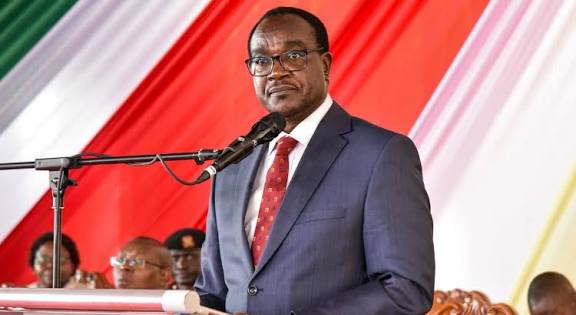
Education Cabinet Secretary Julius Ogamba announced that the 2025 KCSE (Kenya Certificate of Secondary Education) examinations will be released in January 2026. According to the CS, the government wants to provide accuracy and transparency when marking and processing examination results before releasing them to the public.

The 2025 KCSE exams officially started on 21 October 2025 and included oral examinations in various languages (e.g., French, German, Arabic, and Kenyan Sign Language) and practical examinations that ended by the end of October. The number of candidates sitting for the KCSE exams this year has increased to nearly 1 million and continues to increase throughout Kenya.”

Millions of students in grades 6 and 9 are currently undergoing the National Assessments as prescribed by the competency-based education (CBE) system. The Grade 6 learner will take the Kenya Primary School Education Assessment (KPSEA), as this will denote the end of primary education, and the Grade 9 learner will take the Kenya Junior School Education Assessment (KJSEA), which marks the progression to senior secondary school, set to begin in January 2026. Unlike the former KCPE format, Grade 9 students are not to receive a certificate on completion. Instead, they will receive an official slip indicating their achievements across the various subjects.

Additionally, the results of the assessments will be accumulated from the classroom-based assessments conducted in previous grades along with their overall coursework assessments to calculate a final score. The CS stated that the new system is focused more on developing skills, creativity, and continuous assessment than on placing too much pressure through examinations. Therefore, learners will gain a placement into senior schools according to their capabilities and interests based on three pathways: Arts & Sports, Science & Technology, and Social & Economic Studies. This change represents an important step toward the reforms of the Kenyan education system.

By Newshub

By admin

Leave a Reply

Your email address will not be published. Required fields are marked *

You missed

The United States military has conducted precision missile strikes against Islamic State (ISIS) targets in northwest Nigeria, signaling a new phase of active U.S. military engagement in West Africa. The operation, ordered by U.S. President Donald Trump on Christmas Day, involved warships firing long-range missiles from the Gulf of Guinea into Sokoto State, where ISIS-affiliated militants have increased activities in recent months. Video footage released by the U.S. Department of War shows missiles being launched from a U.S. Navy surface combatant operating at sea. Defense analysts assess that the strike likely involved Tomahawk cruise missiles fired from an Arleigh Burke-class guided-missile destroyer — a platform routinely used by the U.S. Navy for long-range precision strikes. The missiles reportedly struck at least two ISIS camps, killing multiple militants, according to a statement from the U.S. military’s Africa Command (AFRICOM). The action marks one of the first publicly acknowledged uses of sea-launched cruise missiles against targets on Nigerian soil. Following the strikes, U.S. Defense Secretary Pete Hegseth thanked the Nigerian government for its support and cooperation, adding cryptically on social media that there is “more to come…” — suggesting additional operations could follow. Nigerian officials also affirmed the strikes were conducted as part of ongoing security cooperation with the United States, emphasizing intelligence sharing and strategic coordination to target extremist groups. A Nigerian foreign ministry post described the impact as “precision hits on terrorist targets” in the northwest. The operation comes amid increased activity by Islamic State-linked groups in Nigeria — particularly the Islamic State Sahel Province (ISSP), sometimes known locally as Lakurawa. This faction has been active in northwestern states such as Sokoto and Kebbi, involved in kidnappings, killings, and attacks on security forces. The U.S. and Nigerian governments have reported conducting intelligence flights over Nigeria since late November, underscoring weeks of planning before the strike. Reuters confirmed U.S. military aircraft and surveillance efforts have been visible across the region as part of preparatory operations. U.S. authorities have framed the strikes as retaliation against militants responsible for violent attacks, including claims that extremist groups are targeting Christian communities. President Trump described the action as a powerful military response to “terrorist scum” committing atrocities, particularly against Christians — a characterization that has sparked international debate about the motivations behind the intervention. Nigerian government officials have stressed that extremist violence affects communities across religious lines and that cooperation with the U.S. aims to address broader security challenges rather than a single sectarian narrative. With President Trump’s warning of further military actions and continued joint efforts between U.S. and Nigerian forces, this strike may herald a broader counter-terrorism campaign in the region. Analysts say long-term stability will require more than kinetic operations, pointing to issues like governance, local security capacity, and socioeconomic development.