

Daisy Nekesa, 28, who has battled endometriosis since 2019, reported that she realised she had the chronic disease after the doctor’s recommendation upon a hospital visit after experiencing a hectic monthly period.
Nekesa adds, that after the doctor’s recommendation, she was booked for a pelvic scan at a cost of Sh7,000.
She spoke to the Star during an exclusive interview on Thursday.
“In 2019, I went through a painful menstrual period that pushed me to seek medical attention and after observation, a doctor advised that it was endometriosis,” Nekesa said.
For her, the disease attacked the right ovary resulting in the formation of a 1- 2 centimetre growth in the pelvic that causes severe pain.
“During the menstrual cycle, those battling endometriosis get it rough because of the heavy overflow and any proposal to impose heavy tax on sanitary pads will kill us more,” Nekesa said.
She says her menstrual cycle goes for a week.
Nekesa also said that managing endometriosis treatment is hectic citing that before enrolling on a medical cover she used to spend a lot of money on treatment adding that NHIF cannot stand in for the treatment.
“Without an insurance cover I used to spend more than Sh6, 000 on drugs,” she said.
She also noted that sometimes during the menstrual cycle, the pain is so severe that she is injected with some painkillers to reduce the pain.
However, Nekesa stated that to reduce pain, her doctor is suggesting surgery in July.
CANNOT GET PREGNANT
On infertility, Nekesa confirmed that those with endometriosis cannot get pregnant.
“Pressure is piling on us that is why we don’t want to get married and sire children forgetting the pains we go through,” she said.
However, Nekesa called on women in villages experiencing pelvic pains to consider visiting health facilities for medical attention. She confirmed that she has not yet sired.
NO CURE AND HOW IT HAPPENS
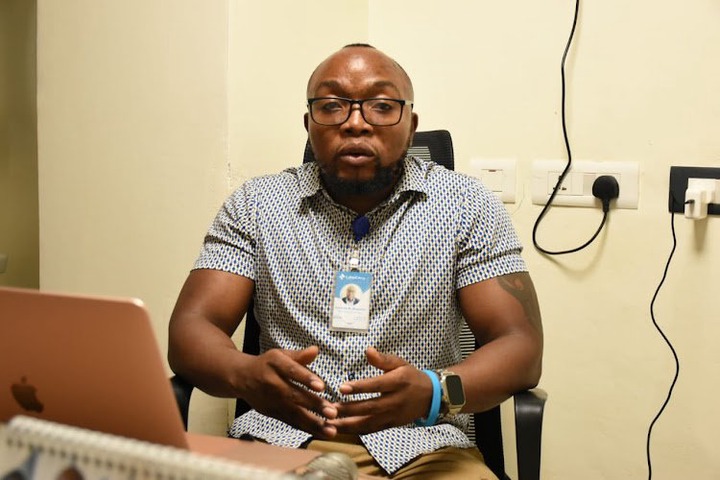
Dr Kendrick Muganda, Medical Superintendent at Life Care Hospitals in Bungoma says that endometriosis is a chronic disease that has no cure.
The expert further states the disease only attacks women destroying the reproductive system.
Dr Muganda says that the causes of endometriosis are not known to date but some medics are linking it to genes.
Muganda noted that the disease occurs when the tissues lining the uterus which are supposed to be eroded during the monthly period cycle in women are found in other places other than the uterus.
“Most of the time you may find these tissues in the pelvic therefore when these tissues are in the pelvic they cause pain and other things,” he said.
The expert added that other places where the tissues can accumulate include the brain, lungs and abdomen causing symptoms in those parts.
“When the tissues go to the lungs it causes difficulty in breathing, “he reported.
SYMPTOMS AND DIAGNOSIS
He further stated that the symptoms of endometriosis are experienced first during the menstrual period when one feels an unusual pain and later realises that she cannot get pregnant.
Additionally, Muganda reveals that it is hard to diagnose endometriosis. He urged those who experience pain when having sexual intercourse or during monthly periods to take earlier caution by visiting the doctor immediately.
“Until now we don’t have an endometriosis cure but the gynecologist and physicians who treat endometriosis mainly focus on pain and the symptoms if it is in the brain they will control symptoms and give drugs,” he said.
He reported that when a woman reaches early menopause or real menopause the endometriosis symptoms will disappear noting that endometriosis is tailored along the menstrual periods; it will occur during the first menstrual period and last until the menopause or it can cause death.
Dr Muganda added that the chronic disease is associated with severe, life-impacting pain during periods, sexual intercourse, bowel movements, urination, chronic pelvic pain, abdominal bloating, nausea, fatigue, and sometimes depression, anxiety and infertility.
According to a report by the World Health Organization (WHO), endometriosis affects roughly 10% (190 million) of reproductive-age women and girls globally.
Muganda said that the endometriosis cases aren’t high in Bungoma.
By Star