

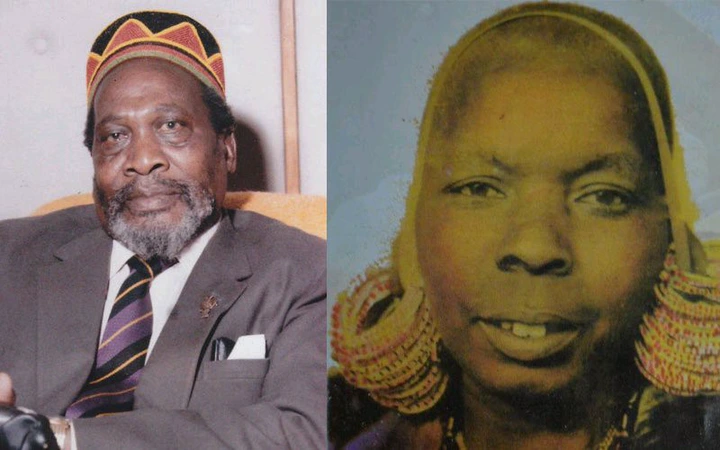
The first president of Kenya, Jomo Kenyatta, was close friends with the traditional healer Njambi, who some in the media referred to as a Mganga (Witchdoctor), and received medical attention from him.
After his husband abandoned Njambi, Mzee Jomo Kenyatta had intentions of getting married to her. The father of Njambi, however, abruptly rejected Jomo’s advances.
After his romantic endeavours struck a snag, Mzee Jomo Kenyatta was left feeling let down. Margaret Njambi, though, continued to be a close friend of his. She then married her first husband again, with whom she had two more children.
Despite adopting the name Margaret, Njambi was never christened and never set foot inside a church.
It’s not apparent what services she rendered to the head of state at a time when traditional physicians, witch doctors, and healers were generally accepted.
She provided specific instructions before she passed away, declaring that her tools of the trade, or witchcraft accoutrements, should never be thrown away but rather maintained so that the next person in her generation might continue her profession.
Drama occurred during her funeral as the Church argued with her family about burning ceremonial artefacts.
The Church ultimately prevailed, but they nevertheless made the decision to pray separately for the family and the accessories.
Her burial was photo-free and conducted by five priests.
Although there was a sizable crowd present to wish her well, no remarks were allowed throughout the ceremony. Sermons could only be preached by priests.
On the graves of Christians, the cross is frequently discovered. Given that the crucifix was buried in the tomb alongside Njambi’s remains, it was odd in her situation.
Reverend Geofrey Kinyanjui, who told a local newspaper that the cross went with her to the grave, claimed that it was unnecessary to place the cross on her grave because she had never attended to a church.
by: SpecialOne