

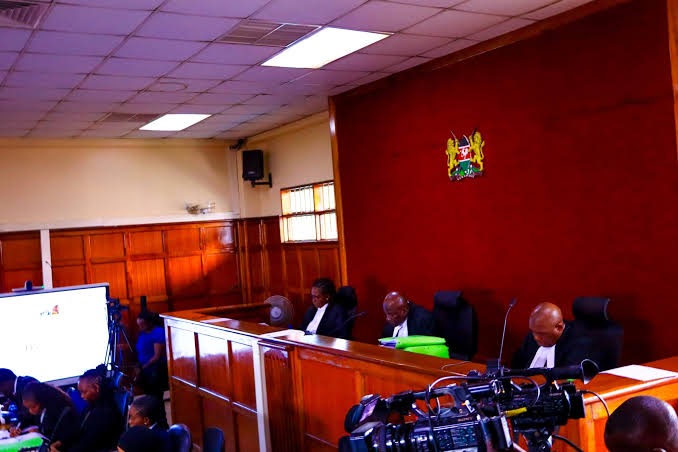
The High Court has delivered a defining ruling regarding the potential imprisonment of Inspector General of Police Douglas Kanja.
High Court Judge Justice Patricia Nyaundi has found the police chief guilty of contempt of court after the police service failed to comply with an earlier order prohibiting road blockades during public demonstrations.
However, the court has officially pardoned IG Kanja, sparing him a direct prison sentence while issuing a stern warning against future disobedience.
The legal proceedings have stemmed from the police service’s decision to barricade roads during this year’s protests anniversary, directly violating directives previously issued by the judiciary.
By pursuing contempt charges, the court has reinforced the fundamental principle that no public officer stands above the law, regardless of rank or position.
High-ranking police commanders have gathered in court to witness the proceedings as the judiciary has asserted its constitutional authority over state law enforcement bodies.
Justice Nyaundi has emphasized that court orders must remain sacrosanct to uphold the rule of law.
While the judge has opted to forgive the Inspector General on this occasion, she has explicitly warned that repeat infractions will attract severe legal penalties, including immediate imprisonment.
The ruling has effectively established a strict judicial precedent, signaling that executive authorities have exhausted their leniency regarding judicial non-compliance.
This landmark decision has drawn widespread public and legal interest across the country. Legal scholars and civil rights advocacy groups have welcomed the judgment as a pivotal moment for judicial independence and institutional accountability.
By formally pardoning IG Kanja while simultaneously threatening imprisonment for future contempt, the judiciary has struck a delicate balance between reprimanding administrative overreach and preserving executive operational stability.
Ultimately, the judiciary has sent a unmistakable message: future disregard for valid court orders will result in direct custodial sentences for top security officials.