

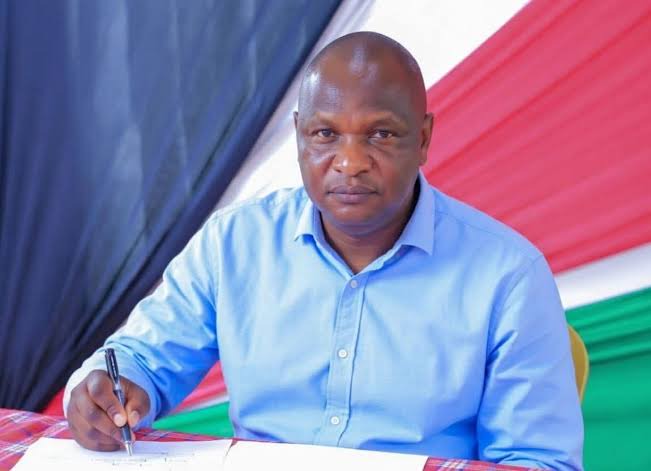
An empowerment event in Teso, Busia County, ended in total disarray after National Assembly Speaker Moses Wetang’ula, State House aide Farouk Kibet, and Busia Governor Paul Otuoma were forced to flee under hostile chants from local youths.
The United Democratic Alliance (UDA) function, designed to rally support across Western Kenya, collapsed when crowds disrupted proceedings by shouting “Sisi ni Sifuna” and “Wantam,” explicitly rejecting executive handouts.
Security personnel scrambled to escort the dignitaries to safety as localized anger over high living costs and anti-incumbent sentiment completely overwhelmed the political gathering.
The dramatic expulsion of senior Kenya Kwanza figures in Busia reflects a rapidly expanding pattern of public hostility targeting ruling coalition leaders across the Western region.
From recent chaotic standoffs in Funyula, Bungoma, and Lugari, executive operatives attempting to project authority are confronting deeply entrenched opposition support.
Political strategists note that youth mobilization in the region has increasingly aligned with opposition vanguards, turning routine government tours into volatile confrontations that demonstrate the ruling party’s deteriorating control over key voter strongholds.
Farouk Kibet’s past as Statehouse chief of protocolSimultaneously, the administration is fighting a fierce defensive battle over its controversial government-to-government (G-to-G) fuel importation framework.
Energy Cabinet Secretary Opiyo Wandayi and allied lawmakers stepped up to defend the arrangement, insisting it was established to mitigate severe US dollar shortages and stabilize domestic currency reserves.
However, the official narrative faced severe blowback following public revelations from Ugandan President Yoweri Museveni, who disclosed that his country had been paying inflated premiums up to $118 per metric tonne for diesel due to Kenyan middlemen exploiting the supply chain.
The convergence of economic scandals and physical rejection on the ground presents an escalating crisis for President William Ruto’s administration ahead of the 2027 General Election.
Opposition leaders have seized on the fuel controversy, characterizing the G-to-G scheme as an opaque apparatus that has artificially inflated fuel prices and worsened living conditions for ordinary citizens.
As grassroots resistance spreads from urban centers into rural strongholds, the executive faces mounting pressure to address fiscal transparency while confronting an increasingly hostile electorate.