

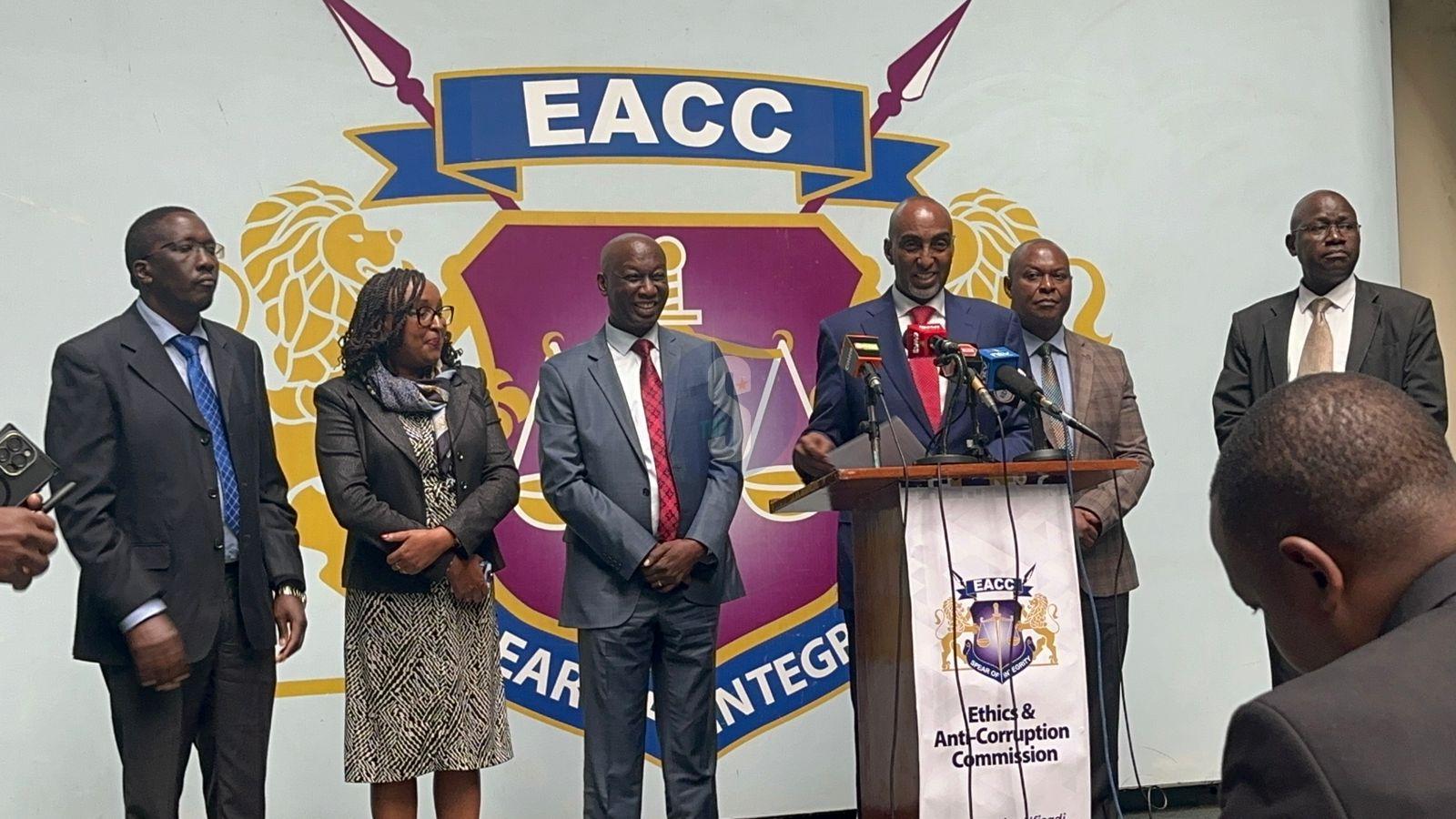
A routine day on Kakamega roads reportedly took an unexpected turn when officers from the Ethics and Anti-Corruption Commission (EACC) moved in on traffic police officers suspected of collecting bribes from motorists.
The dramatic operation, captured on video, showed the officers being cornered and arrested during an alleged bribery crackdown.
Traffic officers are often among the first government officials motorists encounter on the road, making allegations of bribery particularly sensitive.
According to the report accompanying the footage, EACC investigators had been monitoring suspected bribery activities before making their move.
The operation ended with traffic officers being arrested as investigators pursued allegations that motorists had been asked for or had given bribes.
The incident has renewed attention on corruption risks within road enforcement.
For motorists, an alleged demand for a bribe can turn an ordinary traffic encounter into a difficult choice—whether to comply with an unlawful demand or risk facing the consequences of refusing.
For law-enforcement agencies, such cases also raise questions about internal accountability and how effectively corruption complaints are investigated.
The Kakamega operation is a reminder that roadside corruption can be difficult to detect unless investigators gather evidence before confronting suspected officers.
The EACC’s involvement also places the allegations within a broader anti-corruption enforcement effort, where arrests are only one stage of the process.
The officers remain entitled to due process, and an arrest or allegation does not by itself establish guilt.
For now, attention will be on what evidence investigators present and what happens next as the case moves through the legal process.