

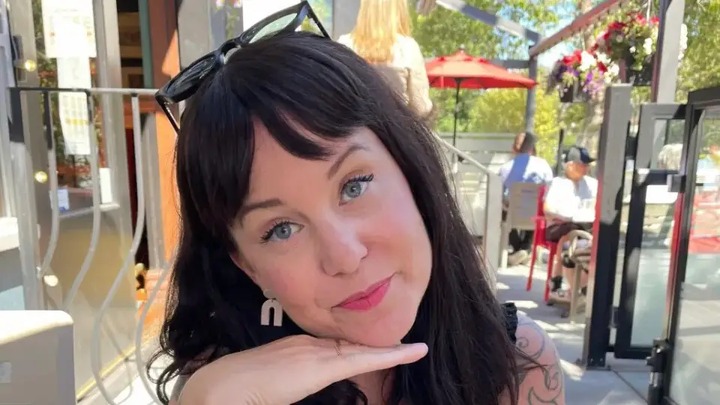
A woman who died by euthanasia previously spoke out about knowing it was her ‘time’ and opened up about living with Alzheimer’s disease before her daughter confirmed the tragic news.
Social media influencer Rebecca Luna, from British Columbia, ended her life through the MAID provision last month. Medical Assistance in Dying refers to the legal and medical framework where a clinician assists an eligible patient in ending their life through prescribed medication.
The TikToker passed away aged 49 on 25 July, according to a post shared to her account. She had been diagnosed with young-onset Alzheimer’s at the age of 48 and had documented her journey online.
In the days leading up to her death, she had told her followers that she had moved up her MAID date to 25 July because a decline in her health had come faster than expected and that she wanted to make the decision while she had capacity.
In her final video, she said: “Prior to the dates changing for the last year and a half has been legally and medically not my choice.
“But for the last two weeks I’ve been making the decision. And it’s a hard decision to make, because I’m living in a body that doesn’t feel comfortable, safe, good, nothing. “It’s been a hard 24 hours, obviously. This is not what I wanted. I would have never chosen young onset Alzheimer’s for myself.”
As per the Toronto Sun, Rebecca’s eldest daughter Maya, confirmed her death, and she leaves behind two daughters. Tributes have since flooded in on social media for the influencer who updated her more than 90,000 fans throughout her journey.
Rebecca shared when she knew it was ‘time’
In another video on 18 July, the mum candidly shared when she knew it was ‘time’, detailing more information about her experience with the disease.
She told her followers that she was due to go to hospital on 4 August before the date was moved forward due to her condition which risked her ‘losing capacity’ to make her own decisions.
“So I was not wanting to make this video and I haven’t wanted to for a while,” she explained. “There’s been things happening that have been terrifying and moving me into a direction of the disease that make things so unpredictable that
I’d be pushing myself into a place of potentially losing capacity to make the decision.
“I’ve been quiet the last couple of days because I’m processing obviously. But it’s real. It’s happening. The hospital is booked. And yeah, it’s not what I want either, but I think it’s the right time.
“Like, I’m starting to be afraid of the things that are happening to me at nighttime… I’ve literally just been processing and grieving and crying and organising things and obviously have family and friends come to visit from out of town to say goodbye and stuff.”
Dying with dignity in Canada described the mum as ‘authentic and funny’ following her death, writing: “She was young and vibrant. She showed up online with real talk. It was a dark sense of humour and I liked it. And she was sharing her health challenges and her journey to a diagnosis that I think most people her age would find scary; young onset Alzheimer’s disease.”
What is young-onset Alzheimer’s?
According to Alzheimer’s Research UK, people who experience dementia symptoms at a younger age may find it takes longer to get a diagnosis or referral because it is less common, and the symptoms can look different from those usually linked with dementia in older adults.
It affects around 71,000 people with dementia in the UK who are under 65 years old at the time of diagnosis. The diseases that cause young onset dementia and dementia in later life are also similar.
However, the impact of young onset dementia can be different because patients are often working, have financial commitments like a mortgage, and may have dependent children still living at home.
Symptoms of young onset Alzheimer’s usually start in people’s 40s, 50s or early 60s. While the symptoms of young onset Alzheimer’s disease are similar to those of late onset Alzheimer’s, they can be harder to recognise, mainly because memory loss is not always one of the first symptoms in younger people.
The main symptoms include trouble finding the right words and following conversations, changes in personality and behaviour including low mood, heightened irritation and lack of confidence and enjoyment, and becoming unsteady, struggling to move around or developing tremors or stiffness.