

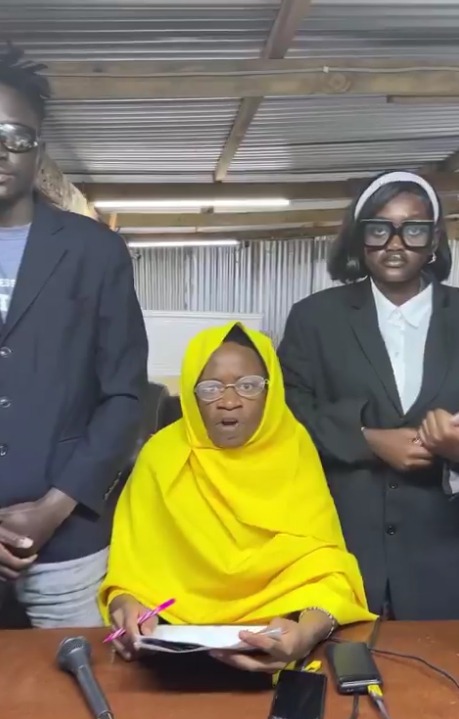
NAIROBI, Kenya — A fresh regional debate over free expression and digital content has emerged after reports indicated that several Kenyan content creators were denied entry into Tanzania and Zanzibar over satirical content allegedly directed at Tanzanian President Samia Suluhu Hassan.
The reported development has triggered widespread discussion across East Africa, with supporters of the creators viewing the move as a challenge to artistic freedom, while others argue that sovereign states have the authority to regulate content and enforce their domestic laws.
According to information circulating online, several Kenyan digital creators were reportedly turned away by immigration authorities upon arrival in Tanzania.
Among those said to have been affected are comedians and content creators Mokaya, Mjaka Mfine, and Lenny Vibes, who have built large audiences through comedy skits, political satire, animated videos, and social commentary.
The creators are particularly popular among young audiences across Kenya, Tanzania, Uganda, and other parts of East Africa.
At the time of publication, Tanzanian authorities had not publicly released detailed information explaining the alleged entry restrictions, while the affected creators had also not issued comprehensive statements outlining the circumstances surrounding the incident.
The controversy is believed to stem from content that referenced Tanzanian politics and President Samia Suluhu Hassan through parody, animation, imitation, and comedic commentary.
Political satire has become increasingly popular on social media platforms, allowing creators to engage audiences through humor while commenting on public affairs and governance issues.
Supporters argue that satire serves as a legitimate form of expression and public discourse. Critics, however, maintain that certain forms of political content can cross into misinformation, personal attacks, or disrespect toward public institutions.
The incident has reignited debate over where the line should be drawn between entertainment, criticism, and political activism in the digital age.
The reported restrictions come amid a broader regional conversation about online regulation and digital communication.
Tanzania has, in recent years, maintained laws and regulations governing online broadcasters, bloggers, and digital content creators. Authorities have consistently argued that such measures are intended to safeguard public order, national security, and responsible communication.
President Samia Suluhu Hassan has also previously cautioned foreign activists, politicians, and commentators against interfering in Tanzania’s domestic affairs.
Supporters of the regulatory approach argue that governments have a legitimate responsibility to protect institutions and maintain social stability.
Critics counter that strict regulations can create concerns about freedom of expression and may discourage open public discussion.
News of the reported entry denials quickly spread online, prompting a wide range of reactions.
Some social media users questioned whether satirical content should influence immigration decisions within the East African region.
Others argued that content creators who comment on political matters must recognize that different countries maintain different legal standards regarding criticism of public officials and government institutions.
The discussion has expanded into broader conversations about:
Freedom of expression in East Africa.
The role of political satire in democratic societies.
Government oversight of digital content.
Cross-border relations within the East African Community.
The growing influence of social media creators in shaping public opinion.
The incident highlights the increasing influence of online personalities in regional affairs.
Unlike traditional media organizations, digital creators can instantly reach audiences across national borders, often shaping public conversations in ways that governments and institutions struggle to control.
As social media continues to transform communication, governments across the world are grappling with how to balance freedom of expression with concerns about misinformation, public order, and national interests.
The reported dispute illustrates how content created in one country can generate consequences in another, particularly when political leaders and sensitive public issues are involved.
For now, many questions remain unanswered.
Observers are calling for greater transparency from both Tanzanian authorities and the affected creators to clarify the circumstances surrounding the reported restrictions and determine whether the measures were temporary administrative actions or part of a broader policy response.
Until official clarification is provided, the incident remains one of the most discussed digital rights and free-expression debates in East Africa this year.
What began as online satire has evolved into a broader conversation about the power of social media, the limits of political humor, and the complex relationship between digital creators and state authority in an increasingly interconnected region.