

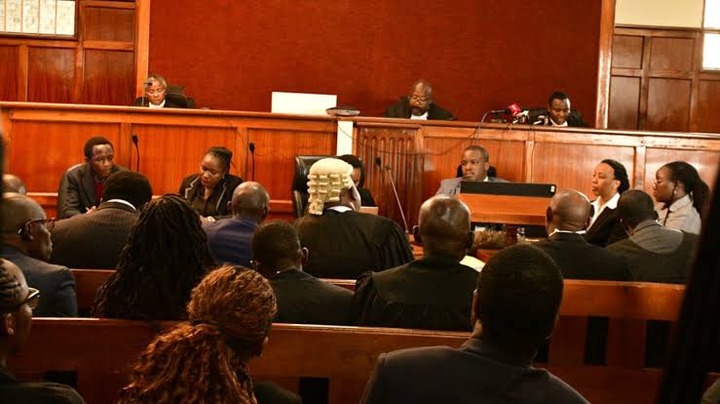
The High Court has ordered the government to disclose all agreements, negotiations, approvals, risk assessments and operational protocols relating to a Kenya–US-proposed Ebola quarantine facility in the country.
Justice Patricia Mande issued the directions on Tuesday amid a legal challenge in which Katiba Institute claims raise constitutional, public health and sovereignty concerns.
The court directed the respondents (AG and Ministry of Health) to furnish a report within seven days detailing the status of the project and the arrangements surrounding the proposed facility.
Petitioners will thereafter be allowed to respond to the report before the matter is mentioned again for compliance.
The judge also allowed the consolidation of a petition filed by the Law Society of Kenya (LSK) with an earlier petition filed by Katiba Institute, with the latter designated as the lead file.
During the proceedings, lawyers representing Katiba Institute faulted the Attorney General’s office for failing to attend court despite earlier directions and not filing responses to the applications before the court.
Lawyer Malidzo Nyawa told the court that the Attorney General had a constitutional obligation to participate in the proceedings and urged the court not to tolerate the continued absence of state representatives.
Nyawa argued that the respondents had not responded to the applications as directed and urged the court to grant the orders sought.
She further raised concerns about compliance with conservatory orders previously issued by the court suspending the construction of the facility pending determination of the case.
According to Nyawa, there were reports indicating that construction activities had continued despite the court’s orders.
He claimed attempts by petitioners to access the military barracks where the facility is allegedly being established had been unsuccessful.
“We have seen reports that construction that was stopped is ongoing, and when we tried to access the barracks to confirm, we were not allowed. We cannot know whether your orders are being complied with or not,” he told the court.
LSK President Charles Kanjama supported the consolidation of the petitions and indicated that the society was willing to rely on the conservatory orders already issued in the lead matter to avoid delaying the substantive hearing of the dispute.
Lawyer Thande Kuria, appearing for the respondents in the LSK matter, did not oppose the consolidation of the cases.
The court’s earlier conservatory orders had halted any further construction or operationalisation of the proposed quarantine facility pending the hearing and determination of the application.
The petitioners contend that the project raises significant questions touching on public health management, public participation, constitutional governance and the extent of agreements entered into by the government regarding the facility.
The orders came after the court admitted several applicants as interested parties in the proceedings, following separate applications seeking leave to participate in the case.
They include the Laikipia County Government, Kenya National Commission on Human Rights (KHCHR), among others.
The case will be mentioned on June 23, 2026, to confirm compliance with court directions.