

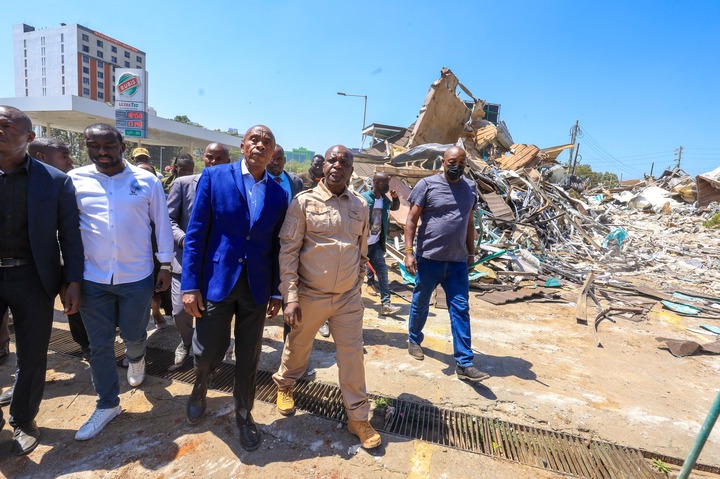
The demolition of Governor Kimani Wamatangi’s properties along Douglas Wakiihuri Road has escalated into a major constitutional crisis involving the nation’s top legal and security officers.
Attorney General Dorcas Oduor, Inspector General Douglas Kanja, and Kenya Railways CEO Phillip Mainga are facing potential jail sentences for contempt of court.
Despite a clear injunction issued by Principal Magistrate Muthoni Njagi at 3:00 p.m., state-led bulldozers proceeded to level the multi-million shilling business premises at 2:00 a.m. the following morning, directly flouting a judicial order.
Governor Wamatangi has characterized the operation as “political persecution” rather than a legitimate recovery of public land.
He maintains that he holds a valid 65-year lease for the property and has consistently paid rent to the Kenya Railways Corporation for over two decades.
The timing of the demolition—conducted under the cover of darkness with heavy police presence—has led many to believe that the move was intended to settle political scores rather than facilitate the planned expansion of the railway corridor.
The logic behind the potential jail terms rests on the fundamental principle that no individual, regardless of their status, is above the law.
When the Attorney General and the Inspector General of Police are accused of defying the very courts they are sworn to protect, it signals a dangerous erosion of the rule of law.
If the court finds that they willfully ignored the restraining order, their imprisonment would serve as a landmark precedent for institutional accountability in Kenya’s history.
Public sentiment is sharply divided, with some viewing the move as a necessary action to reclaim public assets for projects like the Talanta Stadium expansion, while others see it as an intimidation tactic.
Former Deputy President Rigathi Gachagua has fueled this narrative, alleging that the demolition was a coordinated effort by State House to silence Wamatangi due to his rising political influence.
This political undercurrent suggests that the demolition is not merely about land but about the shifting power dynamics within the UDA coalition.
Ultimately, the country is watching to see if the judiciary will assert its authority over the executive arm of government. The case represents a critical test for the independence of the courts and the resilience of property rights for citizens.
Whether the officials serve time or not, the rubble at Nyayo Stadium remains a stark symbol of the ongoing friction between political interests and the legal frameworks that govern the nation.
By Standard