

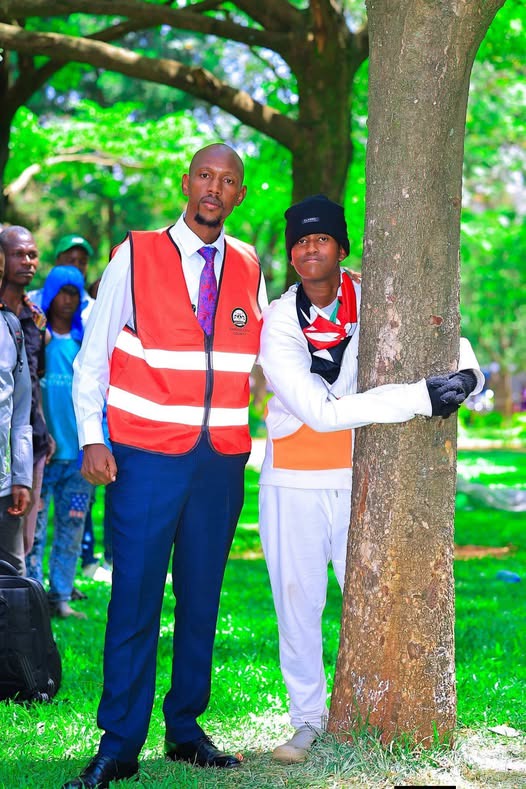
The story of 14-year-old Gachanja, who recently completed a 50-hour tree-hugging challenge in Nairobi, has sparked a mix of admiration and concern across Kenya. Motivated by deep family devotion, the teenager undertook this grueling feat to raise funds for his brother’s critical ear surgery, which is estimated to cost KSh 3.5 million.
Nairobi’s Chief Officer for Environment, Geoffrey Mosiria, visited the young boy to offer support, highlighting the child’s incredible resilience while simultaneously warning of the physical risks associated with such extreme endurance stunts.
This wave of “endurance fundraising” follows the recent success of 22-year-old Truphena Muthoni, who set a world record by hugging a tree for 72 hours in December 2025. While Muthoni’s feat was aimed at environmental conservation and earned her a Head of State Commendation, Gachanja’s mission is more immediate and personal.
The necessity of giving facts that support the boy’s cause is clear; his family’s inability to meet the high cost of specialized healthcare has forced a minor to resort to life-threatening measures to seek public attention and financial aid.
The physical toll of these challenges was made tragically clear just days before Gachanja’s attempt, when 30-year-old James Irungu collapsed during a similar 80-hour challenge in Murang’a.
Irungu, who was raising awareness for cancer, suffered kidney failure after 79 hours and remains under 24-hour hospital observation. These factual outcomes have prompted medical experts and leaders like Mosiria to urge Kenyans to prioritize their health, emphasizing that while the spirit of sacrifice is noble, the body has limits that can lead to permanent organ damage or death.
The popularity of these stunts highlights a growing trend of “creative survival” in a landscape where many Kenyans feel the social safety net is failing. For Gachanja, the tree-hugging marathon was a desperate cry for help that successfully drew in donors and well-wishers, but it also exposed the gaps in the national healthcare system.
The necessity of examining why a 14-year-old felt compelled to risk his health for a medical bill serves as a poignant critique of the current financial barriers facing many families seeking urgent surgical care.
As Gachanja recovers from his 50-hour ordeal, his story continues to dominate social media, with many calling for the government to intervene and cover his brother’s remaining medical costs. While Geoffrey Mosiria praised the boy’s “Green Warrior” spirit, the broader conversation has shifted toward the ethics of allowing minors to engage in such dangerous displays.
Ultimately, Gachanja’s bravery has secured a significant portion of the funds needed, but it remains a sobering reminder of the lengths to which ordinary citizens will go to save their loved ones in a time of economic hardship.
By ParentsAfrica