

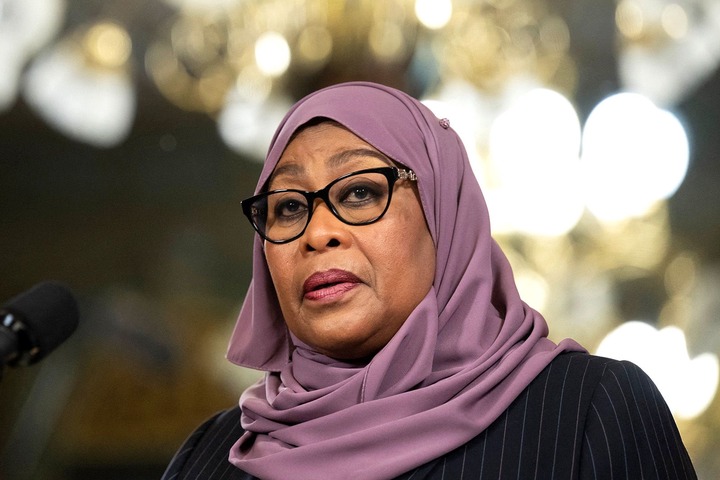
President Samia Suluhu Hassan cast her vote early Wednesday morning in Dodoma as parts of Tanzania descended into chaos amid the ongoing general elections.
The 65-year-old president, dressed in a bright kitenge and flanked by heavy security, arrived at Chamwino Village polling station just after sunrise.
She urged Tanzanians to exercise patience and peace during the voting process, reminding citizens that the ballot was both a civic right and a duty to shape the nation’s future.
Her words of calm, however, contrasted sharply with scenes of violence erupting across the country.
From Dar es Salaam to Arusha and Mbeya, police clashed with angry demonstrators accusing the government of staging a predetermined election.
Many polling centers recorded low voter turnout as opposition supporters boycotted the process, claiming their votes would not count.
Protesters, mostly young people, filled city streets carrying placards branded with slogans under the hashtags #SiriNiNumbers and #MO29, declaring that the election was “a coronation, not a contest.”
Security forces responded with tear gas and rubber bullets, dispersing the crowds as videos circulating online showed armored trucks patrolling major roads and thick smoke rising from burning barricades. In towns such as Tarime and Tunduma, demonstrators reportedly blocked highways and torched ballot boxes.
Amnesty International said at least five people had been injured by midday, with tanks and riot police deployed in Dar es Salaam’s city center — an uncommon move in the country’s electoral history.
The unrest follows weeks of tension sparked by the exclusion of major opposition leaders. CHADEMA’s Tundu Lissu remains in detention despite a court order clearing his candidacy, while ACT-Wazalendo’s Luhaga Mpina was disqualified over alleged technical violations.
Civil rights groups argue that these actions have left voters without real choices at the ballot box.
Human rights organizations, including Human Rights Watch, have linked the government to over 200 cases of enforced disappearances in recent years, among them outspoken critics and clergy members.
Journalists and online commentators have also faced harassment and arrests under restrictive media laws.
President Suluhu, who took power in 2021 promising openness after the death of John Magufuli, now faces growing criticism for replicating his authoritarian approach.
With unemployment and the cost of living rising, her appeal for unity and order has been met with defiance from frustrated youths demanding democratic change
By Newshub