

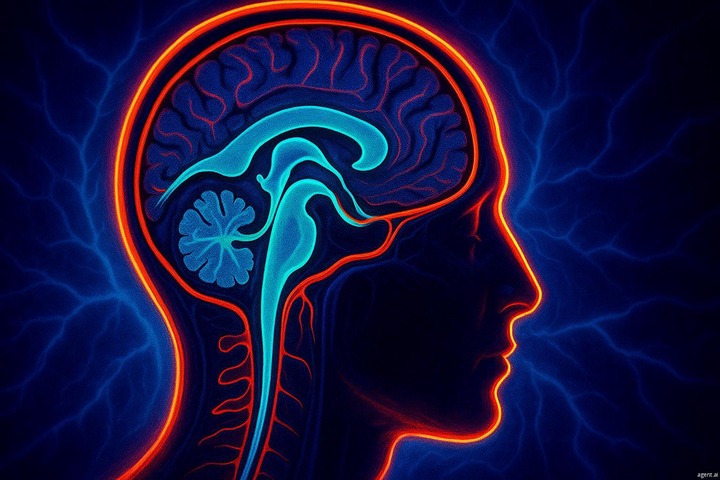
The brain contains interconnected cavities called ventricles that play a critical role in protecting, nourishing, and maintaining its stability. These ventricles are filled with cerebrospinal fluid (CSF), a clear liquid that cushions the brain and spinal cord from injury while supporting essential physiological functions.
Anatomy of the Ventricles
There are four main ventricles in the brain, each uniquely positioned and connected:
– Lateral Ventricles (First and Second): Located in each cerebral hemisphere, these are the largest ventricles. Each lateral ventricle is shaped with anterior, posterior, and inferior horns. They connect to the third ventricle through the Foramen of Monro (also known as the interventricular foramen).
– Third Ventricle: This narrow, midline cavity lies between the two halves of the thalamus. It connects to the fourth ventricle via the cerebral aqueduct (Aqueduct of Sylvius).
– Fourth Ventricle: Situated between the brain stem and cerebellum, the fourth ventricle opens into the central canal of the spinal cord. It contains three openings (foramina) that allow CSF to flow into the subarachnoid space surrounding the brain and spinal cord.
The Choroid Plexus and CSF Production
Inside each ventricle lies the choroid plexus, a specialized network of capillaries responsible for producing cerebrospinal fluid continuously. While present in all ventricles, the choroid plexus is particularly abundant in the lateral ventricles. This continuous production ensures a steady supply of CSF to maintain brain health.
Cerebrospinal Fluid (CSF) Flow Pathway
The circulation of CSF follows a specific pathway:
1. Produced mainly in the lateral ventricles.
2. Flows through the Foramen of Monro into the third ventricle.
3. Passes down the cerebral aqueduct into the fourth ventricle.
4. Exits through the foramina of the fourth ventricle into the subarachnoid space.
5. Finally, CSF is reabsorbed into the venous system via arachnoid villi.
Functions of the Ventricular System
The ventricular system and its CSF serve several key purposes:
– Cushion and protect brain tissue against impacts.
– Maintain intracranial pressure balance.
– Remove metabolic waste and deliver nutrients.
– Provide buoyancy to reduce brain weight and prevent damage.
– Ensure chemical stability within the brain environment.
Protective Layers Surrounding the Brain
The brain is further protected by layers including:
– The scalp and skull, providing an external physical barrier.
– The dura mater, arachnoid mater, and pia mater, which are meninges membranes safeguarding the central nervous system.
– The subarachnoid and subdural spaces, compartments around the brain that house CSF and blood vessels.
Understanding the ventricular system highlights the extraordinary design of the brain’s internal environment to optimize function, protection, and health. Disruptions to this system, such as blockages or infections, can have significant neurological consequences, emphasizing the importance of maintaining its integrity.
By Creatorhub