

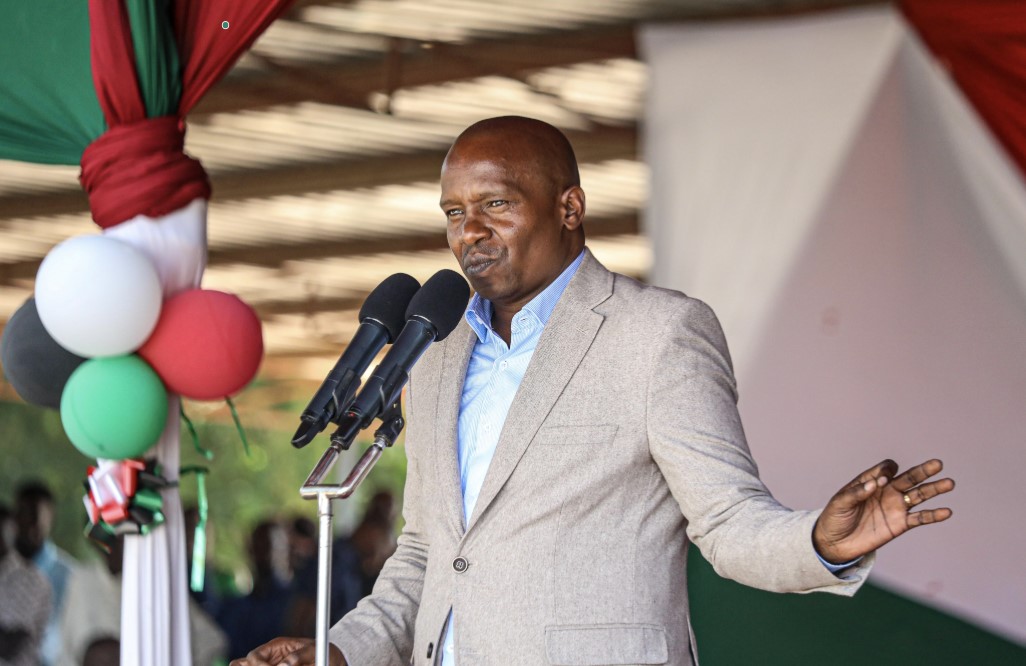
Deputy President Kithure Kindiki has stepped into the heated debate surrounding the Social Health Authority (SHA), moments after claims emerged that millions of taxpayers’ money had been siphoned off through ghost hospitals.
His statement comes at a time when Kenyans are questioning whether the new health system will repeat the dark history of its predecessor, the defunct NHIF.
In his firm response, the second in command assured Kenyans that unlike NHIF, which crumbled under the weight of fraud, SHA has been designed to rise on its ability to detect and prevent fraudulent claims.
He pointed out that the authority’s new structures are already exposing irregularities that would have easily passed under NHIF’s radar. His remarks were captured after revelations surfaced online, with more details available on this post.
Kindiki’s tone was unshaken, signaling the government’s intent to cut off loopholes that have, for years, allowed cartels to milk the health sector dry. For Kenyans still haunted by the NHIF scandals where fake clinics and phantom patients pocketed millions, his statement landed as both a warning and a reassurance.
Political observers say Kindiki’s message was also a direct attempt to reframe SHA as a people-driven institution, not a feeding ground for corrupt insiders. The fact that non-existent hospitals were already being flagged early on shows that the system is not just reactive but proactive.
However, critics argue that words alone will not heal public mistrust. Many Kenyans want to see real action, names of fraudsters exposed, money recovered, and culprits locked up. Anything less will feel like the same old script with new actors.
As the dust settles, one thing is clear: the battle to clean up Kenya’s health sector is only beginning. And for Kindiki, his credibility will be tested not in speeches but in results that Kenyans can see and feel.
By Nairobi